Why Night Vision Fails Where Thermal Wins: The Technical Truth for SA Security
In the South African security landscape, choosing between thermal imaging vs infrared vision isn't just a matter of preference—it’s a matter of life and property. While "Night Vision" is a household term, serious operators, farmers, and security professionals are increasingly pivoting to advanced thermal solutions.
At Cape Thermal, we don’t just sell boxes; we provide technical clarity. Here is why understanding the physics of your optics changes the game.
What is Infrared Vision (Digital Night Vision)?
Infrared (IR) vision relies on near-infrared light. Think of it like a flashlight that only a camera can see. It requires an IR Illuminator to bounce light off a target.
-
The Strength: High resolution and familiar "visual" detail.
-
The Fatal Flaw: It is easily defeated by the South African "Ruigte" (Thick Bush), fog, or dust. If a target is behind a thin layer of vegetation, IR vision only sees the leaves. If a target is 300m away in a pitch-black "vlakte," your IR illuminator might not even reach it.
The Thermal Advantage: Sensing the Invisible
Unlike IR, thermal imaging doesn't need light. It detects heat (long-wave infrared radiation) emitted directly by the object.
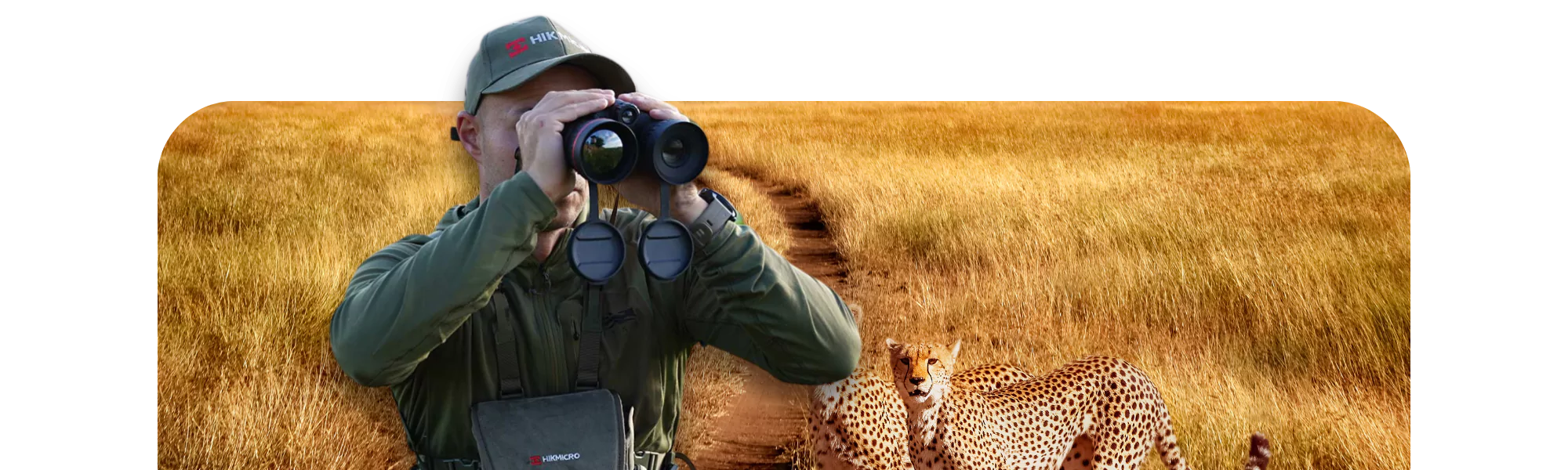
Whether it's a poacher in a thicket or a leopard in the long grass, they cannot hide their heat signature. This makes thermal imaging the ultimate tool for night detection systems where failure is not an option.
The Technical Specs That Actually Matter
When comparing thermal imaging vs infrared optics, don't get distracted by "digital zoom." Look at the sensor data.
| Feature | Digital Night Vision (IR) | High-End Thermal (e.g., Nocpix Quest) |
| Light Requirement | Requires IR Illuminator | Zero Light Needed |
| Foliage Penetration | Blocked by leaves | Sees "Through" light cover |
| Sensitivity (NETD) | N/A | Sub-15mK (Ultra-Sensitive) |
| Detection Range | Usually <400m | Up to 2600m |
Why NETD is the Secret to Detection
At Cape Thermal, we prioritize NETD (Noise Equivalent Temperature Difference). Expressed in milliKelvin (mK), it measures how well a sensor can distinguish between two tiny temperature differences.
-
Standard Thermal: <35mK
-
Cape Thermal Flagships (Nocpix): <15mK
A lower NETD means you can see the texture of an animal's fur or the heat coming off a vehicle engine that has been off for hours.
Which Technology is Right for You?
-
Choose Infrared Vision if you are operating in controlled environments with clear lines of sight and need to recognize specific faces at close range.
-
Choose Thermal Imaging for perimeter security, farm protection, and wildlife monitoring. When you need to find a "needle in a haystack" at 1km in total darkness, thermal is the only answer.
Conclusion: The Cape Thermal Recommendation
For the most robust security setups, we recommend the Nocpix Quest H50R. With its 640x512 sensor and integrated 1000m Laser Rangefinder, it bridges the gap between detection and identification.
https://shop.capethermal.com/products/nocpix-quest-h50r-professional-thermal-binocular
"Exceptional thermal binos—Picks up heat signatures from kilometres away"
"Amazing product! Picks up heat signatures from kilometres away. Been amazing to use to find owls in dense foliage. Great advice and service from Keegan—he made it easy to use and get to grips with. The app interface is a game-changer for sharing the view with others. Exceptional thermal binos!"
Marc Cronje